i Smile Care

TMJ Disorders

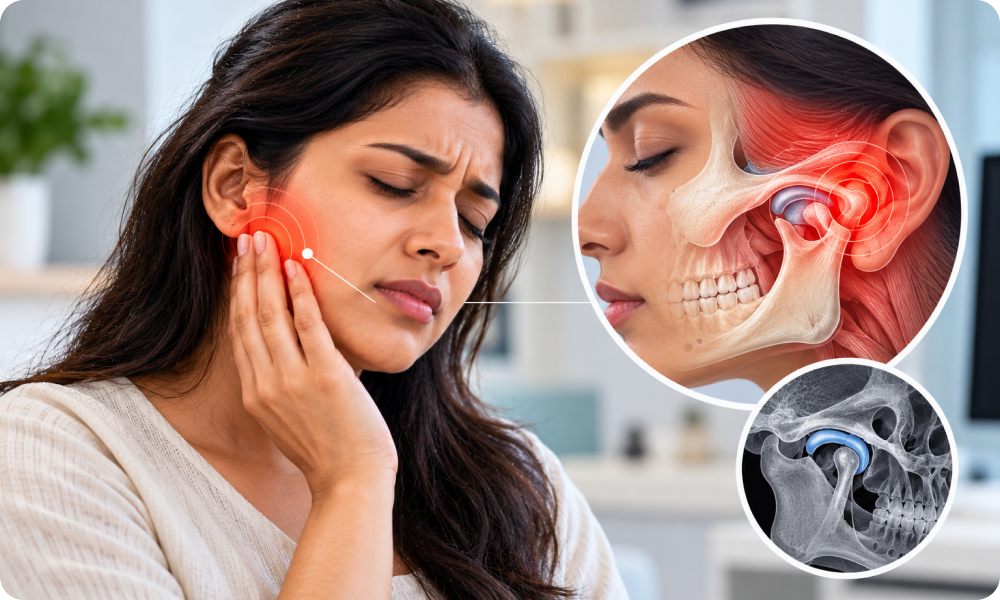
TMJ disorders are not one condition — they are a family of related dysfunctions of the joint,

disc, and surrounding muscles, each requiring a different management approach.

OVERVIEW

What You Should Know

The Diagnostic Criteria for Temporomandibular Disorders (DC/TMD) — the international gold-standard classification system — divides TMJ disorders into two main axes: Axis I (physical diagnoses) and Axis II (pain-related disability and psychological factors). Effective treatment addresses both axes — ignoring the psychological dimension is one of the most common reasons TMD treatment fails.

Physical diagnoses include: myalgia (muscle pain), myofascial pain (with referral), disc displacement with and without reduction, degenerative joint disease (osteoarthritis), and subluxation. Each diagnosis has specific clinical features, specific imaging correlates, and specific treatment algorithms. Lumping all jaw pain under the label ‘TMD’ and treating empirically leads to poor outcomes.

At I Smile Clinic, Dr. Anu conducts a full DC/TMD assessment and communicates the specific diagnosis — not a vague ‘TMJ problem’ — along with a written treatment plan that explains the rationale for every recommended intervention. Patients who understand their diagnosis engage better with treatment and achieve better outcomes.

Ready to Get Started?

Book a consultation with our specialists and receive a personalized treatment plan.

SCOPE OF CARE

Conditions We Treat

Disc Displacement with Reduction

The articular disc is displaced but returns to position on opening — causing a characteristic click. Often manageable with splint therapy and monitoring.

Disc Displacement without Reduction

The disc does not reduce on opening — causing restricted mouth opening (closed lock) or, in chronic cases, a silent joint with altered bite.

Degenerative Joint Disease

Arthritic changes in the bony structures of the TMJ — causing crepitus (grating sounds), progressive pain, and bite change.

Joint Hypermobility / Subluxation

The condyle translates excessively on opening — sometimes dislocating — causing a clunking sensation and jaw locking in the open position.

Inflammatory Arthritis

Systemic inflammatory conditions including rheumatoid arthritis, psoriatic arthritis, and ankylosing spondylitis can involve the TMJ.

Myalgia & Myofascial Pain

Muscle-origin TMD — the most prevalent category — presenting as jaw muscle tenderness, limited opening, and diffuse facial aching.

HOW IT WORKS

Your Treatment Journey

DC/TMD Assessment

Structured clinical examination following the validated international protocol — standardised palpation, provocation, and measurement protocol.

Axis II Screening

Pain catastrophising, somatisation, anxiety, and depression are screened using validated questionnaires — because psychological factors predict treatment outcome as strongly as physical findings.

Imaging

CBCT for bony architecture; MRI for disc position and joint fluid. Imaging is ordered based on diagnostic uncertainty, not routinely.

Diagnosis Communication

A written report clearly states the DC/TMD diagnosis, the evidence supporting it, and the treatment rationale. You leave the consultation knowing exactly what is wrong and why.

Coordinated Management

Complex cases requiring physiotherapy, psychology, neurology, or oral surgery are managed through coordinated referral with clear communication between all providers.

FAQs

Common Questions

What is the difference between TMD and TMJ?

TMJ refers to the temporomandibular joint itself — the joint. TMD (temporomandibular disorder) refers to the family of conditions that affect the joint and its surrounding muscles. Everyone has a TMJ; not everyone has TMD.

EXPLORE MORE

Related Treatments

TMJ (Temporomandibular Joint)

The temporomandibular joint connects your jaw to your skull. When it malfunctions, the effects ripple far beyond the jaw itself — causing pain, clicking, and restricted movement.

Learn More

TMJ Pain

TMJ pain is one of the most misdiagnosed conditions in medicine. Dr. Anu's specialist training in orofacial pain means you get an accurate diagnosis and a targeted treatment plan.

Learn More

Orofacial Pain Management

Specialized treatment for TMJ disorders, facial pain, and myofascial pain. We use advanced diagnostic techniques to identify the root cause and provide targeted relief.

Learn More

Ready to Begin Your TMJ Disorders Journey?

Our specialists will evaluate your case and design a treatment plan built around your goals.