Snoring is not just a nuisance — it can signal airway compromise.
Dental solutions offer effective, comfortable relief for snorers and their partners.
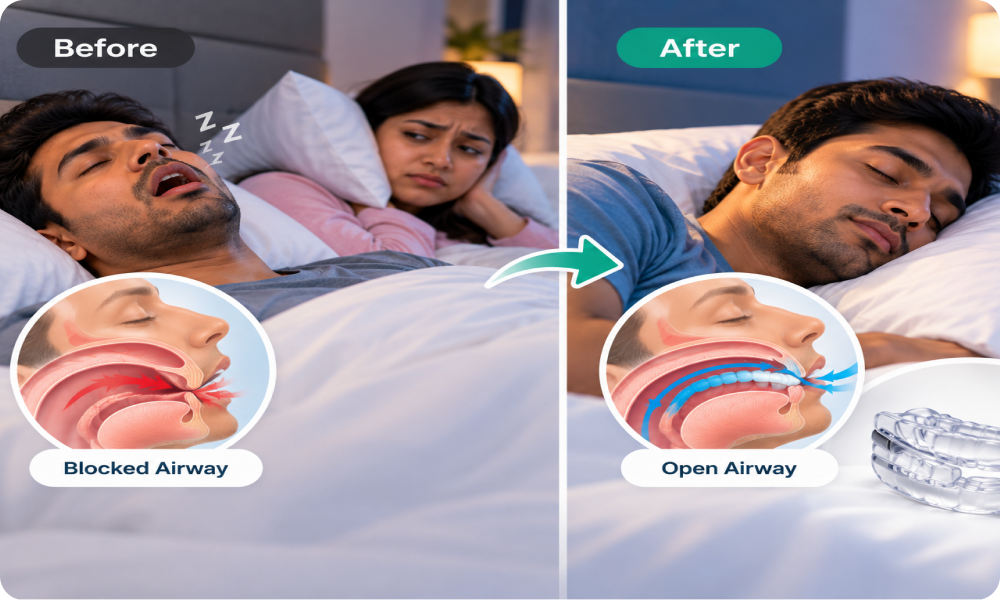
Snoring is caused by vibration of the soft tissues in the upper airway — the soft palate, uvula, and tongue base — during sleep. As the throat relaxes, the airway narrows. Breathing turbulence causes the surrounding tissues to flutter, producing the characteristic sound. In its mildest form, snoring is a social inconvenience. In more severe presentations, it accompanies episodes of partial or complete airway obstruction — sleep apnea.
Mandibular advancement devices (MADs) — custom-fitted dental appliances worn during sleep — address snoring by holding the lower jaw slightly forward. This tensioning of the tongue and pharyngeal muscles prevents the airway collapse that causes vibration. The effect is rapid, often noticed on the first night of use.
Before fitting a snoring appliance, we screen for obstructive sleep apnea — because untreated sleep apnea is a cardiovascular risk factor requiring more comprehensive management. Where OSA is suspected, we arrange a sleep study before proceeding. Treating snoring without identifying underlying OSA would be incomplete care.
Book a consultation with our specialists and receive a personalized treatment plan.

Habitual snoring without significant oxygen desaturation or apnea — the most common presentation and the most straightforwardly treated with an oral appliance.

Snoring that occurs only when sleeping on the back — caused by the tongue falling backward and partially obstructing the airway.

Partners of snorers suffer significant sleep fragmentation — with measurable consequences for daytime function and health.

Nasal obstruction from allergies or deviated septum drives mouth breathing and exacerbates snoring — we coordinate with ENT colleagues where indicated.

Excess pharyngeal fat significantly narrows the airway. Oral appliances provide symptom relief while lifestyle modification addresses the underlying factor.

Loud, irregular snoring with witnessed breath-holding is a red flag for sleep apnea — warranting a sleep study before any appliance is fitted.

Validated questionnaires (Epworth Sleepiness Scale, STOP-BANG) assess the likelihood of underlying sleep apnea.

Patients with a positive screen are referred for a home sleep test or in-lab polysomnography to rule out or diagnose sleep apnea.

For confirmed primary snoring, digital scans of the upper and lower arches are used to fabricate a precisely fitting mandibular advancement device.

The appliance is fitted and adjusted over several visits to find the jaw position that opens the airway maximally while remaining comfortable.

Partner reports are the most reliable outcome measure for snoring treatment. We use this feedback alongside patient comfort scores to optimise appliance position.
The majority of patients see a significant reduction or complete elimination of snoring. Success rates in clinical trials exceed 80% for primary snoring. Residual snoring may respond to positional adjustments of the appliance.
Primary snoring (without apnea) is not directly dangerous, though it disrupts partner sleep. Snoring accompanied by breath-holding, gasping, or excessive daytime sleepiness may indicate sleep apnea — which carries cardiovascular and metabolic risks.
Minor tooth and jaw soreness in the first weeks is common. Long-term bite changes are possible and are monitored at follow-up. Morning jaw exercises help manage this.
Weight loss, reducing alcohol (especially close to bedtime), sleeping on your side, and treating nasal congestion all reduce snoring severity. For many patients, lifestyle modification combined with an appliance produces the best outcome.

Custom mandibular advancement devices prescribed by trained dental sleep medicine specialists offer evidence-based treatment for mild-to-moderate obstructive sleep apnea.

Comprehensive treatment for sleep disorders, snoring, and sleep apnea to improve your quality of life.

Specialized treatment for TMJ disorders, facial pain, and myofascial pain. We use advanced diagnostic techniques to identify the root cause and provide targeted relief.
Our specialists will evaluate your case and design a treatment plan built around your goals.