
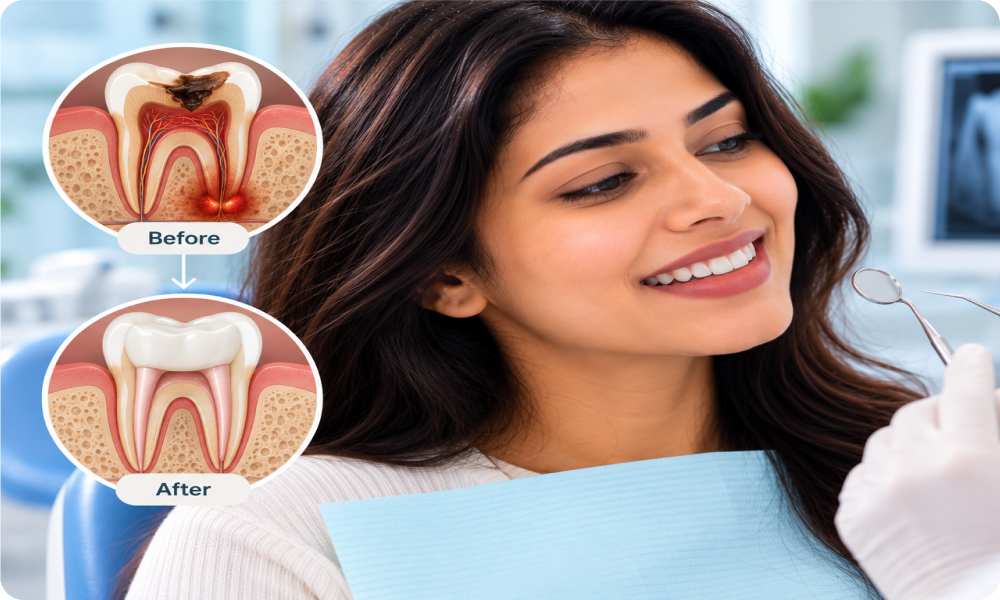

Inflammation of the pulp that will not resolve on its own — causing spontaneous, lingering pain that antibiotics cannot cure.
Death of the pulp tissue — often painless initially but leading to abscess formation at the root tip as bacteria colonise the empty canal.
A collection of pus at the root tip caused by bacterial infection spreading from a necrotic pulp — causing swelling, fever, and intense pain.
Decay that reaches the pulp cannot be treated with a filling alone — root canal therapy is required to eliminate the infection source.
Cracks that extend into the pulp allow bacteria to colonise the root canals, causing pulp death and requiring endodontic intervention.
Root canals that become re-infected can often be retreated successfully — either through conventional re-treatment or, in difficult cases, surgical endodontics.

Clinical testing (cold, electric pulp, percussion) combined with X-rays confirms the pulpal diagnosis and extent of periapical involvement.

Effective local anaesthesia is established. A rubber dam is placed to isolate the tooth and maintain a sterile operating field throughout the procedure.

The pulp chamber is accessed, canals are located under magnification, their length measured with an apex locator, and they are shaped with rotary instruments to a precise taper.

Sodium hypochlorite and EDTA irrigants are cycled through the canals to dissolve tissue remnants and eliminate bacteria from the canal walls and lateral branches.

The canals are filled with warm gutta-percha. A temporary or permanent seal is placed. A crown is fabricated and fitted — ideally within 2–4 weeks of the root canal — to protect the tooth.

Custom-fabricated ceramic crowns cap damaged teeth and restore their full form and function. Bridges span gaps using adjacent teeth as support — a time-tested fixed solution for missing teeth.

Expert restorative treatments to repair damaged or decayed teeth and restore full dental function.

From the first invisible mineral loss to a painful abscess, caries follows a predictable path. Understanding each stage helps you make informed decisions about your dental health.