Author: appsfruit

  • Does Snoring Need Treatment? When Snoring Is More Than Just a Noise

    Does Snoring Need Treatment? When Snoring Is More Than Just a Noise


    Dental Sleep Medicine

    Does Snoring Need Treatment?

    • June 29, 2026
    • 6 min read

    By Dr. Brijesh, Orthodontist

    Does Snoring Need Treatment? When Snoring Is More Than Just a Noise

    Almost everyone snores occasionally. After a long day, a blocked nose, or sleeping in the wrong position, snoring can happen to anyone.

    But what if the snoring is loud, happens every night, or disturbs your partner’s sleep?

    Many people think snoring is harmless. In reality, persistent snoring can sometimes be a sign of an underlying sleep problem that requires medical attention.

    So, does snoring really need treatment? The answer depends on the cause.

    What Causes Snoring?

    When we sleep, the muscles of the throat relax. As air passes through the narrowed airway, the surrounding tissues vibrate and create the sound we call snoring.

    Several factors can increase the chance of snoring:

    • Sleeping on your back
    • Nasal blockage or allergies
    • Being overweight
    • Alcohol consumption before bedtime
    • Smoking
    • Poor sleep habits
    • Enlarged tonsils
    • A narrow airway
    • Certain jaw positions

    Sometimes, the problem is simply occasional snoring. In other cases, it may indicate a more serious condition.

    When Is Snoring Normal?

    Occasional snoring may occur:

    • During a cold or nasal congestion
    • After sleeping very late
    • After alcohol consumption
    • During periods of exhaustion

    This type of snoring is usually temporary.

    When Does Snoring Need Treatment?

    You should consider evaluation if:

    • You snore loudly every night.
    • Your partner notices pauses in your breathing.
    • You wake up feeling tired.
    • You experience morning headaches.
    • You feel sleepy during the day.
    • You wake up with a dry mouth.
    • You struggle to stay awake while driving or working.

    These symptoms may suggest a condition called sleep apnea.

    What Is Sleep Apnea?

    Sleep apnea is a condition in which the airway repeatedly collapses during sleep.

    As a result:

    • Breathing stops for a few seconds.
    • Oxygen levels may decrease.
    • The brain briefly wakes the body to restart breathing.

    These interruptions can happen many times throughout the night.

    Many patients do not realize they have sleep apnea because they are asleep when it happens.

    Signs That Snoring May Be Serious

    You should not ignore snoring if you have:

    • Loud snoring every night
    • Choking or gasping during sleep
    • Pauses in breathing
    • Excessive daytime sleepiness
    • Morning headaches
    • Difficulty concentrating
    • Poor sleep quality
    • High blood pressure
    • Irritability or mood changes

    Can Snoring Affect Your Health?

    Persistent snoring and untreated sleep apnea may contribute to:

    • Daytime fatigue
    • Poor concentration
    • Reduced work performance
    • Relationship problems
    • Increased risk of high blood pressure
    • Heart-related problems
    • Reduced quality of life

    Early diagnosis and treatment can improve both sleep and overall health.

    How Is Snoring Evaluated?

    A doctor may ask about:

    • Sleep habits
    • Snoring patterns
    • Daytime sleepiness
    • Medical history
    • Lifestyle factors

    A sleep study may sometimes be recommended to determine whether sleep apnea is present.

    Treatment Options for Snoring

    Treatment depends on the underlying cause.

    Lifestyle Changes

    Simple changes can sometimes help:

    • Lose excess weight
    • Sleep on your side
    • Avoid alcohol before bedtime
    • Maintain a regular sleep schedule
    • Stop smoking

    Treat Nasal Problems

    Managing allergies or nasal blockage may improve airflow.

    Oral Appliance Therapy

    Special dental appliances can help move the lower jaw forward during sleep, keeping the airway open.

    These devices may help selected patients with snoring and obstructive sleep apnea.

    CPAP Therapy

    For moderate to severe sleep apnea, CPAP therapy may be recommended.

    Surgery

    In certain situations, surgical treatment may be considered.

    Which Doctor Should You See for Snoring?

    Depending on the cause, evaluation may involve:

    • Sleep physicians
    • ENT specialists
    • Pulmonologists
    • Orofacial pain and dental sleep medicine specialists

    A proper diagnosis helps determine the best treatment.

    Can Snoring Be Cured?

    Many people experience significant improvement when the underlying cause is treated.

    The earlier the problem is identified, the better the chances of improving sleep quality and overall health.

    Final Thoughts

    Snoring is not always harmless. While occasional snoring may be normal, loud and persistent snoring should not be ignored.

    If snoring is affecting your sleep, your partner’s sleep, or causing daytime tiredness, it may be time to seek professional evaluation.

    Treating snoring can improve sleep quality, energy levels, and overall health. Sometimes, it can even uncover hidden sleep disorders such as obstructive sleep apnea.

    Remember: not every snorer has sleep apnea, but every persistent snorer deserves proper evaluation. Book your consultation for evaluation of Snoring at Dr.Brijesh’s i SMILE Orofacial Pain clinic, Kochi

    Meet Dr. Brijesh

    Dr. Brijesh S is a trusted orthodontic specialist dedicated to creating confident smiles and enhancing overall well-being. A Professor in the Department of Orthodontics at Mar Baselios Dental College and an experienced Consultant Orthodontist, he brings over a decade of expertise in advanced, patient-centered care.

    He is a certified Invisalign provider, helping patients achieve beautifully aligned teeth through clear aligner therapy. His expertise also includes lingual orthodontics and the use of Temporary Anchorage Devices (TADs), enabling precise and efficient treatment even in complex orthodontic cases.

    BDS , MDS ( Orthodontics and Dentofacial Orthopedics)

    Certified in Dental Sleep Medicine

    Invisalign Provider

    Clear Aligner & Lingual Orthodontics Expert

    15+ Years Experience

    Smile Design & Complex Orthodontic Cases

    My vision is to create confident smiles that not only look beautiful but also improve overall health and quality of life
    Dr-Brijesh

    Experience the I Smile Difference

    Join thousands of satisfied patients who trust us with their dental health


    Book Consultation


    View Treatments

  • Who Is an Orofacial Pain Specialist? A Complete Guide to TMJ, Jaw Pain & Facial Pain

    Who Is an Orofacial Pain Specialist? A Complete Guide to TMJ, Jaw Pain & Facial Pain


    TMJ / Orafacial Pain

    Orofacial Pain Management

    • June 29, 2026
    • 6 min read

    By Dr. Anu Vijayan, Orofacial Pain Specialist

    Who Is an Orofacial Pain Specialist? The Doctor Who Treats Jaw Pain, Facial Pain, and TMJ Problems

    Have you been suffering from jaw pain, facial pain, ear pain, headaches, or difficulty opening your mouth?

    Have you visited multiple doctors but still haven’t found the real reason for your pain?

    You may need to see an orofacial pain specialist.

    Many people are unaware that there is a specialized branch of dentistry dedicated to diagnosing and treating pain in the face, jaw, mouth, and related structures. An orofacial pain specialist helps patients who suffer from chronic jaw pain, TMJ disorders, facial pain, headaches, teeth grinding, and sleep-related breathing problems.

    What Is Orofacial Pain?

    “Oro” means mouth, and “facial” refers to the face. Orofacial pain simply means pain that occurs in the mouth, jaw, face, head, or nearby structures.

    This pain can sometimes feel like:

    • Jaw pain while chewing
    • Pain near the ear
    • Clicking or popping sounds in the jaw
    • Facial pain
    • Frequent headaches
    • Tooth pain without cavities
    • Difficulty opening the mouth
    • Neck pain associated with jaw problems
    • Pain while yawning

    Many patients suffer from these symptoms for years without knowing the exact cause.

    Who Is an Orofacial Pain Specialist?

    An orofacial pain specialist is a dentist who receives advanced training in diagnosing and treating pain conditions affecting the:

    • Jaw joints (TMJ)
    • Jaw muscles
    • Face
    • Mouth
    • Head and neck region

    These specialists focus on finding the true source of pain rather than simply treating the symptoms.

    What Conditions Does an Orofacial Pain Specialist Treat?

    1. TMJ Disorders

    The temporomandibular joint (TMJ) connects your lower jaw to your skull.

    Problems with this joint may cause:

    • Jaw pain
    • Clicking sounds
    • Difficulty opening the mouth
    • Jaw locking
    • Pain while chewing

    Many people search online for a “TMJ doctor” or “jaw pain specialist.” An orofacial pain specialist is specifically trained to manage these conditions.

    2. Facial Pain

    Pain in the cheeks, temples, or facial muscles may not always come from the teeth.

    Facial pain can result from:

    • Muscle problems
    • Nerve-related pain
    • Jaw joint disorders
    • Headaches

    3. Teeth Grinding and Clenching

    Many people unknowingly grind or clench their teeth, especially during sleep.

    This can lead to:

    • Tooth wear
    • Jaw pain
    • Morning headaches
    • Muscle pain

    4. Chronic Headaches

    Certain headaches may actually be related to jaw muscles and jaw joints.

    Patients who suffer from frequent headaches sometimes find relief after proper diagnosis and treatment.

    5. Ear Pain Without Ear Disease

    Some people repeatedly visit ENT specialists because of ear pain, but their ears appear normal.

    Jaw joint problems can often cause pain around the ear.

    6. Sleep-Related Breathing Problems

    Some orofacial pain specialists also manage:

    Jaw joint problems can often cause pain around the ear.

    • Snoring
    • Obstructive sleep apnea
    • Sleep-related jaw problems

    Oral appliances may help selected patients improve their sleep quality.

    When Should You See an Orofacial Pain Specialist?

    You should consider consulting an orofacial pain specialist if you experience:

    • Jaw pain lasting more than a few weeks
    • Clicking or popping in the jaw
    • Difficulty opening the mouth
    • Frequent headaches
    • Pain near the ears
    • Facial pain
    • Teeth grinding during sleep
    • Morning jaw stiffness
    • Pain while chewing

    Early diagnosis often prevents the condition from becoming more severe.

    How Is the Problem Diagnosed?

    The specialist will carefully evaluate:

    • Your medical history
    • Jaw movements
    • Bite relationship
    • Muscle tenderness
    • Head and neck examination
    • Stress-related factors
    • sleep habits

    In some cases, additional investigations such as imaging studies may be recommended.

    The goal is to understand why the pain is occurring and develop an individualized treatment plan.

    What Treatments Are Available?

    Treatment depends on the underlying cause.

    Options may include:

    • Lifestyle modifications
    • Jaw exercises
    • Stress management
    • Oral appliances or splints
    • Physical therapy
    • Medications
    • Sleep appliances for snoring and sleep apnea
    • Multidisciplinary care when necessary

    Most patients improve with conservative, non-surgical treatments.

    Is Surgery Always Needed?

    No.

    Most jaw pain and TMJ problems can be successfully managed without surgery.

    Early diagnosis and proper treatment often provide significant relief.

    Why Is Orofacial Pain Often Misdiagnosed?

    Symptoms of jaw disorders can resemble:

    • Tooth pain
    • Ear infections
    • Sinus problems
    • Headaches
    • Neck pain

    As a result, patients may visit multiple doctors before receiving the correct diagnosis.

    An orofacial pain specialist looks at the relationship between the teeth, jaw joints, muscles, nerves, and sleep patterns to identify the actual cause.

    Final Thoughts

    Persistent jaw pain, facial pain, headaches, ear pain, or difficulty opening the mouth should not be ignored.

    An orofacial pain specialist is specially trained to diagnose and treat these complex conditions. Early treatment can improve comfort, function, sleep quality, and overall quality of life.

    If you have been searching for a jaw pain doctor, TMJ specialist, facial pain specialist, or doctor for unexplained ear pain, an orofacial pain consultation may help identify the real cause of your symptoms. book your appointments for orofacial pain specialist at Dr.Anu Vijayan’s Orofacial Pain centre which is an exclusive orofacial pain clinic in Dr.Brijesh’s i SMILE dental & Orofacial Pain clinic at Kochi


    Meet Dr. Anu

    Dr. Anu Vijayan is a Professor at Mar Baselios Dental College and an experienced Oral Medicine Specialist, CBCT Radiologist, and expert in Orofacial Pain and Dental Sleep Medicine, with over a decade of clinical and academic expertise.

    She is an invited speaker at national and international dental forums, actively contributing to continuing education and professional development in dentistry.

    As an Oral Medicine specialist, she focuses on the early diagnosis and non-surgical management of complex oral and facial conditions. Her expertise includes evaluation and treatment of oral mucosal diseases, precancerous lesions, burning mouth syndrome, chronic facial pain, TMJ disorders, and unexplained dental pain. She also plays a key role in identifying systemic conditions that manifest in the oral cavity, enabling timely and accurate diagnosis.

    BDS, MDS (Oral Medicine & Radiology)

    Masters in Orofacial Pain & Dental Sleep Medicine (USA)

    Orofacial Pain Specialist

    Certified TMJ & Facial Pain Expert

    15+ Years Experience

    Treating Complex Cases

    “My mission is to provide pain-free, comprehensive dental care with a focus on understanding and treating the root cause of orofacial pain.”

    Dr Anu

    Experience the I Smile Difference

    Join thousands of satisfied patients who trust us with their dental health


    Book Consultation


    View Treatments

  • Clear Aligners: Benefits, Treatment Process & Everything You Need to Know

    Clear Aligners: Benefits, Treatment Process & Everything You Need to Know


    Aligners

    Invisible Braces, Beautiful Smiles: Everything You Need to Know About Clear Aligners

    • June 27, 2026
    • 6 min read

    By Dr. Brijesh, Orthodontist

    A simple guide to straightening your teeth without metal braces.

    Many people want straighter teeth but hesitate when they hear the word “braces.” The thought of metal brackets, wires, food restrictions, and frequent dental visits often makes adults postpone orthodontic treatment.

    Fortunately, modern dentistry offers a more comfortable and discreet option called clear aligner therapy. These transparent trays have transformed the way crooked teeth are corrected and have become increasingly popular among teenagers and adults.

    This article explains what clear aligners are, how they work, and why many patients prefer them over conventional braces.

    What Are Clear Aligners?

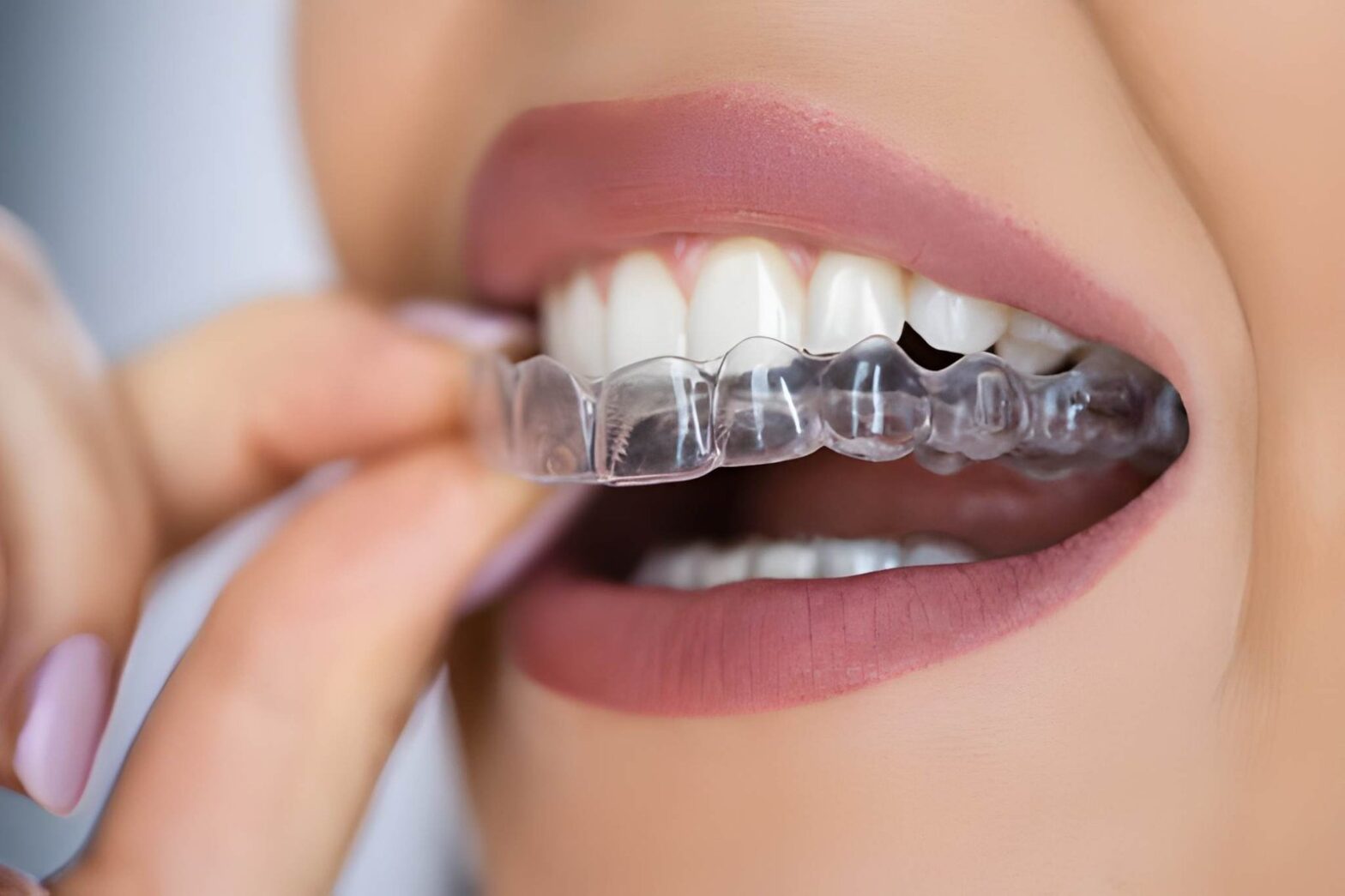
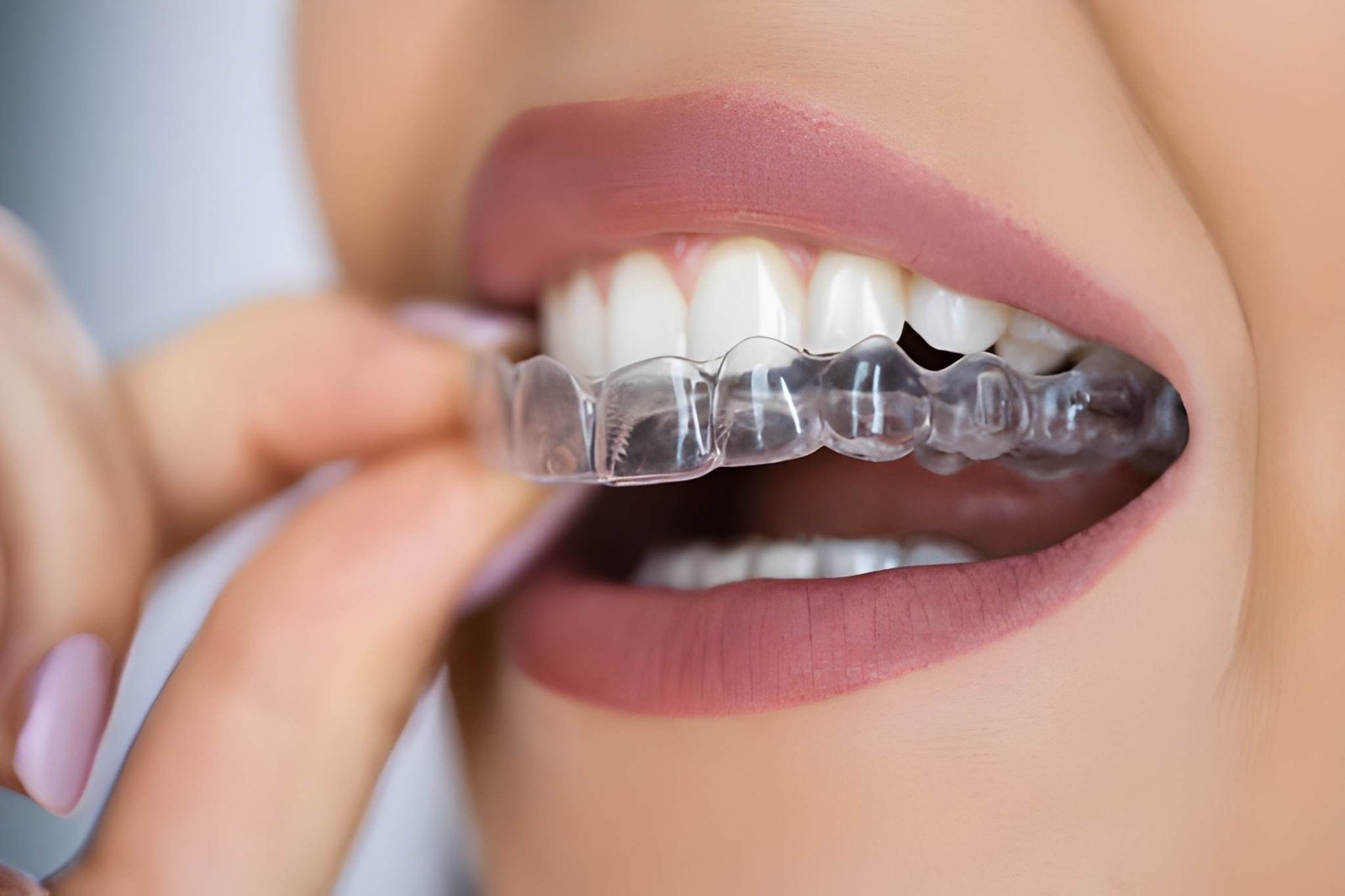
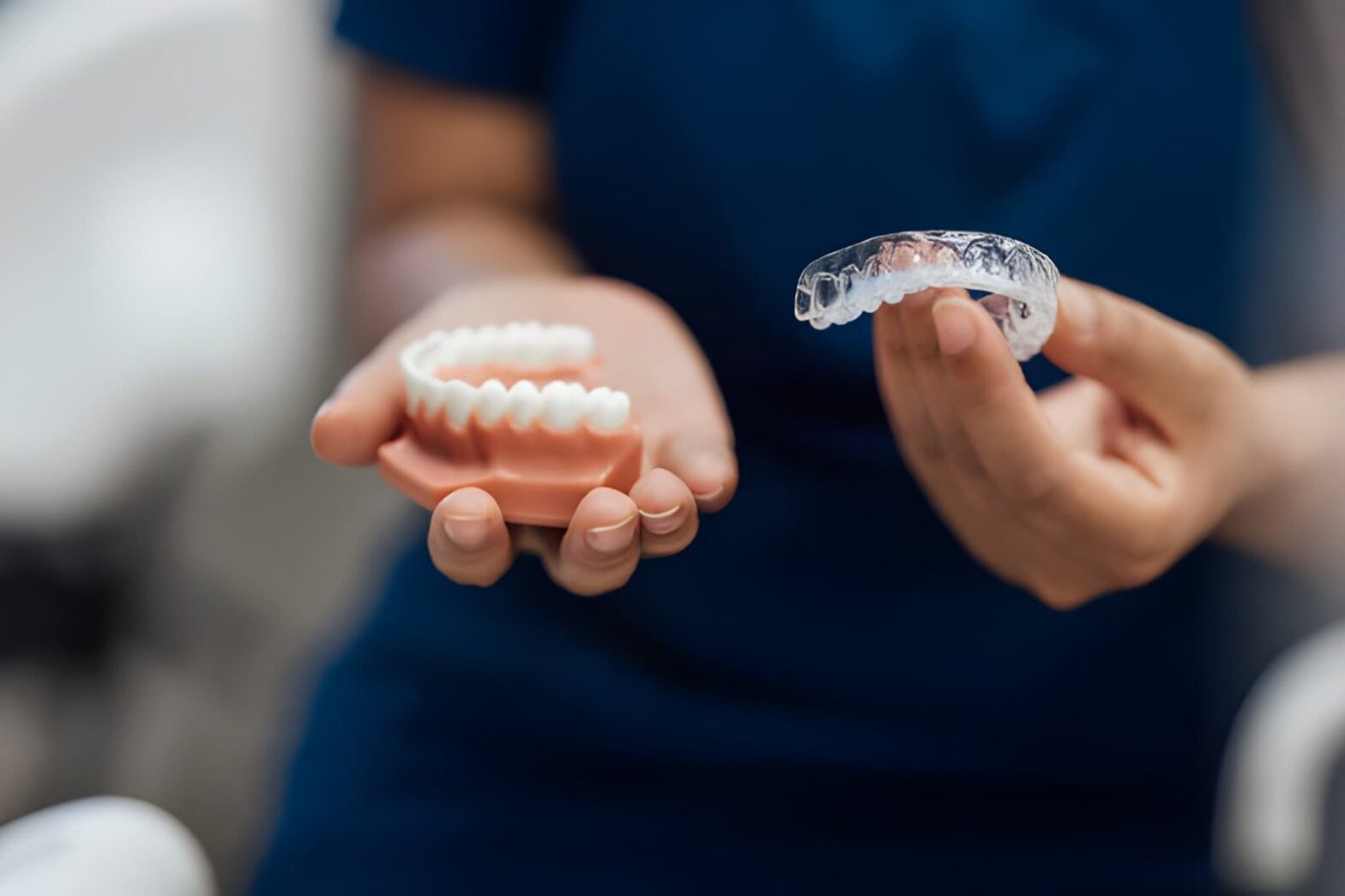
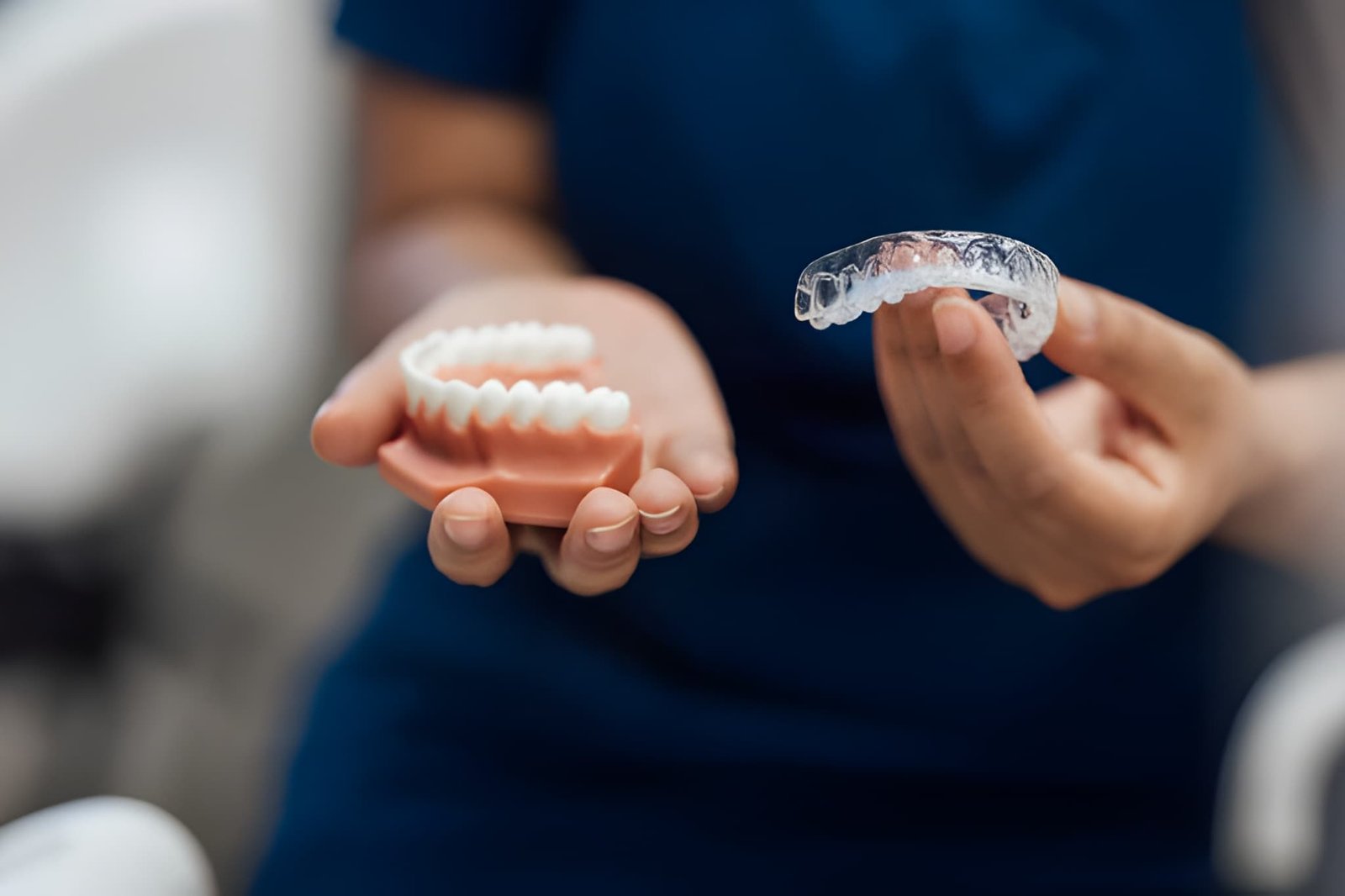
    Clear aligners are a series of transparent, removable trays that gradually move your teeth into the desired position.

    Each aligner is custom-made to fit your teeth. The trays apply gentle pressure to move teeth little by little over time.

    Unlike traditional braces, clear aligners do not use metal brackets or wires. Since they are nearly invisible, most people cannot even notice that you are wearing them.

    How Does Clear Aligner Treatment Work?

    The treatment usually involves the following steps:1. ConsultationYour dentist examines your teeth, bite, and smile. 2. Digital ScanningInstead of traditional impressions, many clinics use digital scans to create a 3D model of your teeth. 3. Treatment PlanningSpecial software shows how your teeth will move and what the expected final result will look like. 4. Wearing the AlignersYou receive a series of aligners, each worn for about 1–2 weeks. 5. Regular ReviewsYour dentist monitors your progress and provides the next sets of aligners. Most patients wear their aligners for 20–22 hours daily, removing them only for eating, drinking, brushing, and flossing.

    Who Can Benefit from Clear Aligners?

    Clear aligners can correct many orthodontic problems, including:

    • Crooked teeth
    • Spacing between teeth
    • Mild to moderate crowding
    • Protruding front teeth
    • Certain bite problems
    • Relapsed teeth after previous braces treatment

    Not every case is suitable for aligners, and some complex problems may still require conventional braces.

    Why Are Teeth Alignment Problems Important?

    Many people think crooked teeth are only a cosmetic issue. However, misaligned teeth can also cause:

    • Difficulty cleaning teeth
    • Increased risk of cavities
    • Difficulty chewing
    • Gum disease
    • Speech problems
    • Jaw discomfort in some cases

    Correcting alignment can improve both appearance and oral health.

    Advantages of Clear Aligners Over Traditional Braces

    One of the biggest reasons for the popularity of clear aligners is the comfort and convenience they offer.

    1. Nearly Invisible Appearance

    • The greatest advantage is aesthetics.

    Clear aligners are transparent, making them difficult to notice. Adults who are concerned about their appearance at work or social gatherings often prefer aligners.

    2. Removable During Meals

    • Traditional braces require patients to avoid certain foods.
    • Sticky, hard, or crunchy foods can damage brackets.
    • With clear aligners, you simply remove the trays before eating.

    This means you can continue enjoying:

    • Nuts
    • Popcorn
    • Fruits
    • Special occasion meals

    There are virtually no dietary restrictions.

    3. Easier to Maintain Oral Hygiene

    • Brushing and flossing around brackets and wires can be difficult.
    • Food often gets trapped in traditional braces, increasing the risk of cavities and gum problems.
    • With aligners, you remove the trays and brush normally.
    • This helps maintain better oral hygiene throughout treatment.

    This helps maintain better oral hygiene throughout treatment.

    4. Greater Comfort

    • Metal wires and brackets can sometimes irritate the cheeks and lips.
    • Clear aligners have smooth surfaces, making them generally more comfortable.
    • Patients often experience less irritation and fewer emergency visits.

    5. Fewer Dental Visits

    Traditional braces usually require frequent wire adjustments.

    Many clear aligner patients require fewer appointments because several sets of aligners are provided in advance.

    This is especially beneficial for:

    • Busy professionals
    • College students
    • People who travel frequently

    6. Predictable Results

    • Modern digital technology allows dentists to plan tooth movements accurately.
    • Patients can often see a digital preview of their expected smile before treatment begins.
    • This visualization improves understanding and motivation.

    7. Better Confidence During Treatment

    • Many adults delay orthodontic treatment because they feel embarrassed about wearing braces.
    • Clear aligners allow patients to smile, speak, and attend social events confidently throughout treatment.

    Are Traditional Braces Still Better in Some Cases?

    Yes

    Although clear aligners offer many advantages, traditional braces remain highly effective for certain complex cases.

    Braces may be preferred for:

    • Severe crowding
    • Major bite corrections
    • Significant jaw discrepancies
    • Certain tooth movements
    • Patients who may not wear aligners consistently

    Your dentist or orthodontist will recommend the most suitable option based on your individual needs.

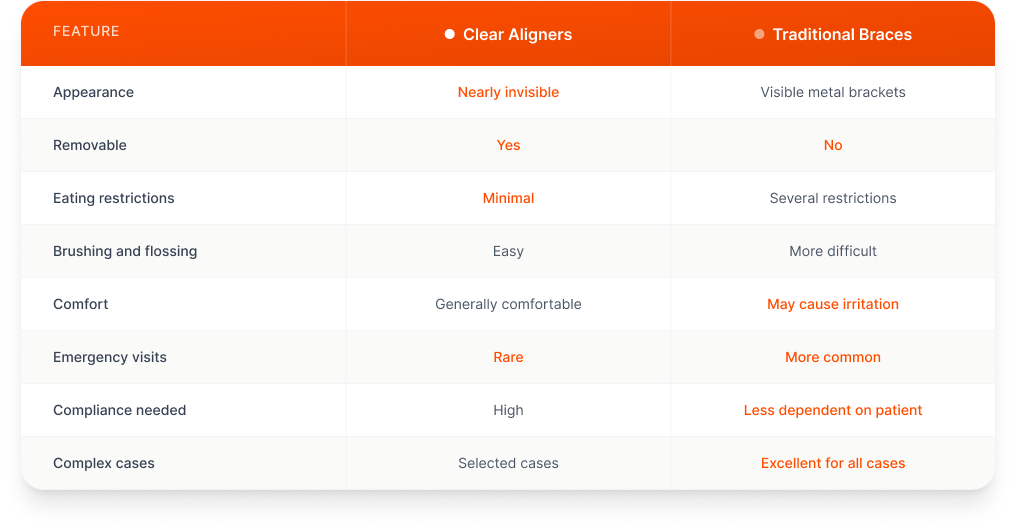
    Clear Aligners vs. Traditional Braces

    Both options move teeth through the same biological process. The right choice depends on your case complexity, lifestyle, and goals.

    What Are the Disadvantages of Clear Aligners?

    No treatment is perfect.

    Clear aligners may have some limitations:

    • Must be worn 20–22 hours daily
    • Can be lost or misplaced
    • Require patient discipline
    • May not be suitable for every case
    • Some cases may take longer if aligners are not worn properly

    Success depends heavily on patient cooperation.

    Do clear aligners hurt?

    Mild pressure is normal when changing to a new aligner. This usually settles within a few days.

    Can I eat while wearing aligners?

    No. Aligners should be removed before eating.

    Can I drink coffee while wearing them?

    Plain water is recommended while wearing aligners. Hot beverages and colored drinks may stain or damage the trays.

    Are clear aligners only for adults?

    No. Teenagers and adults can both benefit from aligner therapy.

  • Understanding Clear Aligner Costs in Kochi: What to Expect for Your Smile Investment

    Understanding Clear Aligner Costs in Kochi: What to Expect for Your Smile Investment


    Aligners

    Understanding Clear Aligner Costs in Kochi: What to Expect for Your Smile Investment

    • June 27, 2026
    • 6 min read

    By Dr. Brijesh, Orthodontist

    Dental Care Aligners Instructions

    It’s so important to maintain dental clear aligners after the Invisalign treatment. You might be requested to wear them for around 20 hours each day. It is ideal to remove them only while eating, drinking, brushing, or flossing. Here are some points on how to use and maintain your invisalign clear aligners.

    • To clean your aligners, use water or a tiny bit of toothpaste and a soft-bristled toothbrush
    • Solutions such as Invisalign Cleaning Crystals or Retainer Brite can be used to soak your aligners.
    • Don’t clean your aligners with denture cleaners, alcohol, bleach, or hot water.
    • Keep your aligners in their containers and avoid leaving them out or exposing them to extreme temperatures.
    • Remove the aligners while eating.
    • Rinse out your aligners before placing them again in your mouth.

    If you are in search of the best Invisalign in Kochi,Kerala then Dr. Brijesh’s dental clinic is the last place you need to look. Here we offer the top invisalign treatment in Kochi,Kerala. Connect with us to learn more about the invisalign treatment.

    Invisalign, Made From

    BPA-free plastic trays are used for making these Invisalign clear aligners. Using them ensures that you find Invisalign a better and more comfortable alternative than metal braces. Apart from the differences in appearance and usage, the result is the same – alignment. The Invisalign treatment  starts with a consultation. This helps the dentist to understand your goals, explain and prescribe your process. As part of the consultation, the dentist will prepare a personalised aligner treatment where you can remove the aligners. This makes your eating and oral hygiene easier. We ensure that the invisible aligners cost is budget-friendly.


    Meet Dr. Brijesh


    Meet Dr. Anu

    Who Can Wear These Invisible Dental Braces?

    Age is not a limitation for Invisaligners; both adults and teenagers can wear them. But it does not mean it is suitable for everyone. Proper case selection and diagnosis are essential to deciding whether it is right for you or not. The prices quoted for the Invisalign treatments, at Dr Brijesh’s are affordable. The process has a balance of advanced technology and expert care, resulting in a lasting smile transformation. Our Invisalign specialist is exceptionally trained to deliver you the best service. A dental exam and X-rays will determine whether Invisalign benefits you or not. Invisalign is a perfect solution for dental issues like overbites, underbites, open bites, crossbites, overcrowded teeth, and closes gaps between teeth.

    How Does The Transparent Aligners Process Work?

    A personalized treatment will be made based on an examination. Examination will be carried out with X-rays and a 3D model. The Invisalign treatment is planned out based on these results. It shows your teeth’s movement and the time needed for proper alignment. 3D representations show how Invisalign gradually corrects orthodontic issues. X-rays, 3D models, and images of teeth are used for making customised Invisalign aligners.

    Understanding Clear Aligners Cost in Kerala: What Affects the Price?

    Clear braces, a modern orthodontic technology, invisibly straightens your teeth by looking like a second layer of your teeth. They are a long-term investment, with a high upfront cost. Certain factors affect the cost, they are:

    The complexity of your dental alignment

    Minor issues need fewer aligner trays which have a lower cost. Moderate cases need more trays, likely attachments or refinements required. These increase the price. Severe cases need more trays, possibly auxiliary tools needing more frequent monitoring. They have the highest cost.

    Duration of the treatment

    The treatment can take place for short and long durations. The short duration is 4-6 months. The cost charged is low because only fewer trays and fewer appointments are needed. The longer duration takes 12-24 months or more. This time period needs more trays, more checkups, sometimes more complex tooth movements which increases the charges.

    The number of aligners needed

    This depends on the severity of your case. For mild cases, around 10–20 aligners are needed for small corrections. For moderate cases, around 20–30 aligners are needed, and severe or full-mouth cases require 30–50 aligners or more.

    Type of aligner system used

    Premium brands are costly while local brands are budget-friendly. Brands like Invisalign, Spark, and ClearCorrect are premium brands. Brands like Toothsi, Clearbee, Pristine, and MAXDENT Clear Aligners are local brands.

    Any additional procedures or refinements required

    Bone grafting, sinus lift, and alternatives like Zygomatic Implants are the procedures. These are needed when the jawbone is too thin or soft, when bone is not enough in the upper back jaw, or when implants cannot fuse to the bone or in severe bone loss.

    Invisible braces will approximately cost between ₹60,000 and 2 lakhs. Even though this is a general cost, it can vary. Not everyone has to go through all of these steps. Some cases need more treatment and follow ups, whereas some don’t. It all depends on how severe your problem is.

    Meet Dr. Brijesh

    Dr. Brijesh S is a trusted orthodontic specialist dedicated to creating confident smiles and enhancing overall well-being. A Professor in the Department of Orthodontics at Mar Baselios Dental College and an experienced Consultant Orthodontist, he brings over a decade of expertise in advanced, patient-centered care.

    He is a certified Invisalign provider, helping patients achieve beautifully aligned teeth through clear aligner therapy. His expertise also includes lingual orthodontics and the use of Temporary Anchorage Devices (TADs), enabling precise and efficient treatment even in complex orthodontic cases.

    BDS , MDS ( Orthodontics and Dentofacial Orthopedics)

    Certified in Dental Sleep Medicine

    Invisalign Provider

    Clear Aligner & Lingual Orthodontics Expert

    15+ Years Experience

    Smile Design & Complex Orthodontic Cases

    My vision is to create confident smiles that not only look beautiful but also improve overall health and quality of life

    Dr-Brijesh

    Experience the I Smile Difference

    Join thousands of satisfied patients who trust us with their dental health

    Book Consultation


    View Treatments